


Product Parameters
|
item |
value |
|
Application |
Anti-drone Detector |
|
Place of Origin |
China |
|
Brand Name |
SIGNOWA |
|
Function |
alarm, position, tracking |
|
Keywords |
Drone Detector |
|
Frequency customization |
100-6000MHz |
|
Model |
SIG-X1D |
|
Detection Mode |
360°passive Detection |
|
Detection Range |
5-10km (Base on local area signal environment) |
|
Detection result refresh time |
3-5s |
|
Duration: |
24 hours |
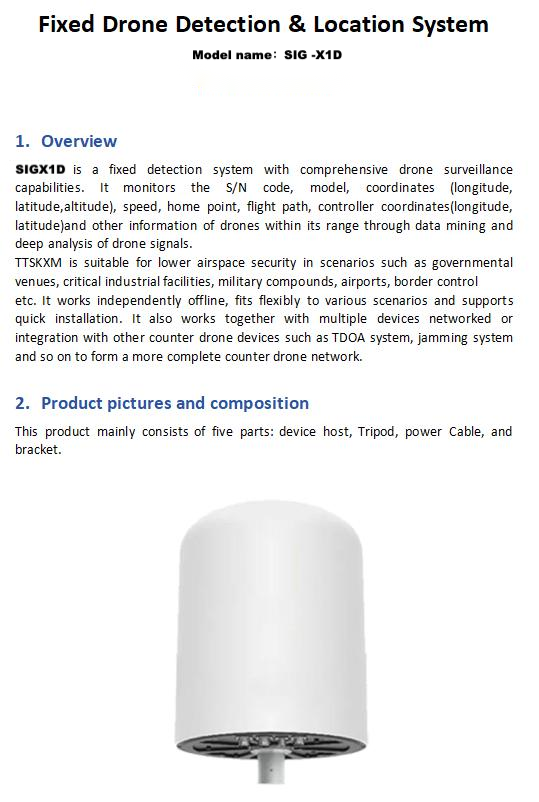
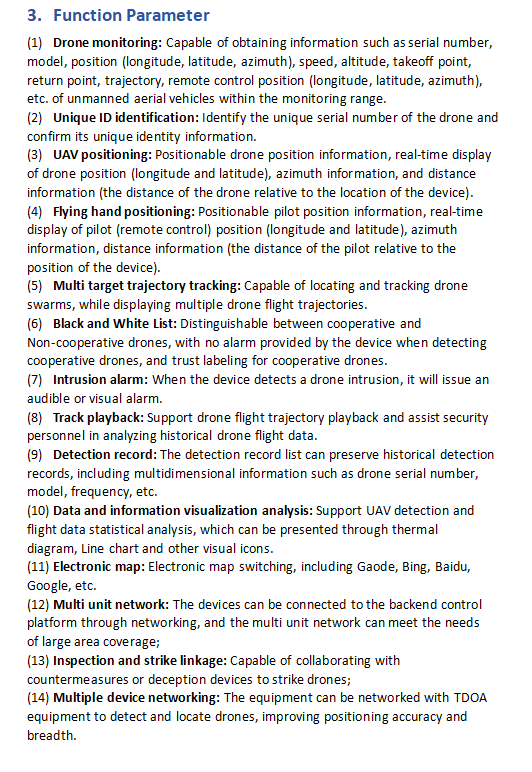
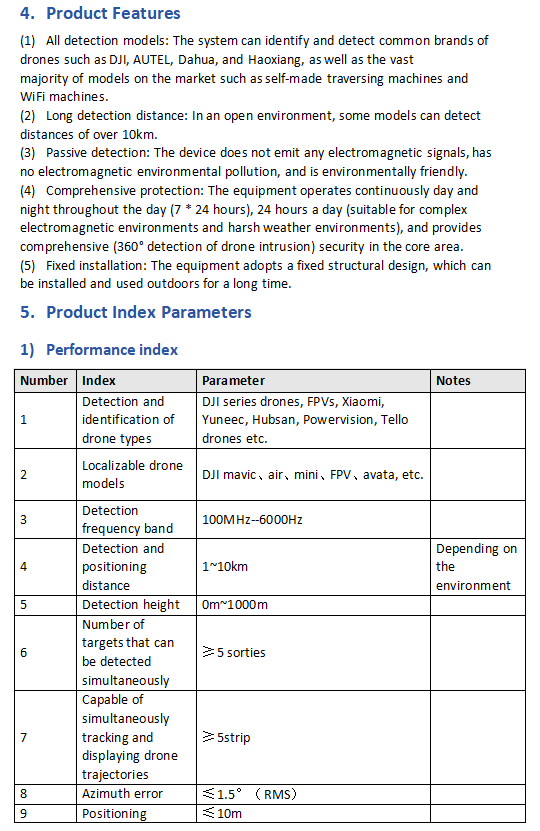
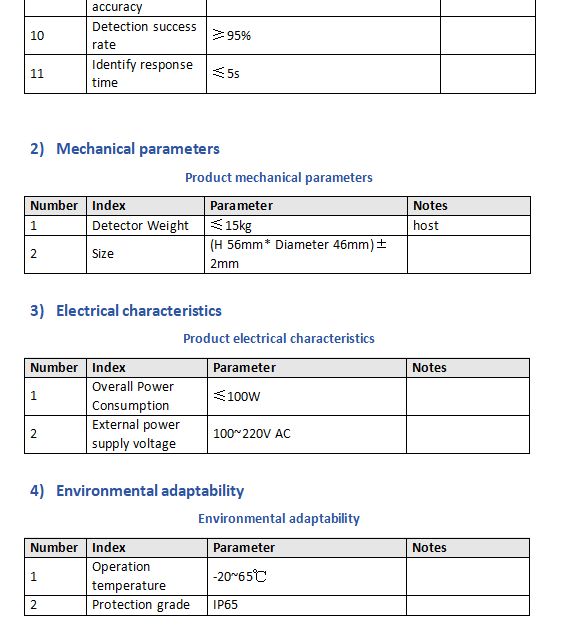


Nothing leaves this unit. It works entirely by listening, which is the difference between equipment that can be sited almost anywhere and equipment that has to be planned around the spectrum it occupies. Because there is no transmission, an anti drone solution built around this detector does not compete with the Wi-Fi, radio and mobile services already running on site, and it will not take a site's own communications down while it works. There is an operational benefit too: a passive unit gives a drone operator no warning that anyone is watching, so the intrusion is reported before the flight is abandoned or the approach changed. Hospital campuses, residential districts and dense business parks suit this approach particularly well, and neighbouring nodes can run side by side without interfering with one another.
Choosing between a handheld detector, a vehicle-mounted or tripod-deployed system, a fixed passive detection installation, and a GaN suppression module comes down to your site, your threats and your existing equipment. Our team works with integrators and security buyers from your first enquiry: we help match the right detection range, band coverage and output level to the job, support customisation of module parameters, and stay available through installation, commissioning and troubleshooting. Send us your deployment scenario and we will recommend a configuration.
An alert the moment a drone signal appears, with the identification the operator needs to judge it. From there the team works the way any control room does: verify the contact, decide the response, and hand the location to patrols or to a neutralisation layer if the site has one. The real value of a passive layer is warning time — the aircraft is reported while it is still on its way in, not when it is overhead.
It varies with the size of the perimeter, the terrain and how much of the approach you want covered. Open ground needs fewer nodes than a site hemmed in by buildings, and a larger property usually grows in stages rather than all at once. Send us the site layout and the approaches you care about, and we will propose a node count and mounting plan for the anti drone system.
Yes. Frequency customization is part of the specification, so the detector is not locked to one band. Integrators and anti drone companies usually tell us which control and video links matter at their site, and we confirm the configuration before the units are built. If the threat picture changes later, talk to us about the options.
The detector watches the bands drones use for control and video and identifies signals that match those profiles, so it alerts on a drone rather than logging everything in the air. The band plan and alarm settings are agreed with your team during planning, which keeps nuisance alerts down in busy radio environments. In an anti drone defense system that identification step is what lets an operator separate a genuine intrusion from background traffic.
Very little. Keep each mounting secure and the antennas clear of new obstructions such as signage, foliage or rooftop equipment added after installation. Check periodically that the network path and the alerts still reach your control room, and contact us if a unit stops reporting — troubleshooting is part of the support that comes with every system.
A handheld drone detector is a patrol tool: an officer carries it to confirm what is happening on the ground. This unit is installed permanently, watches all the time, and works as part of a network that fixes locations rather than just bearings. Sites that run both usually use the handheld for field checks and the fixed installation for continuous coverage.


