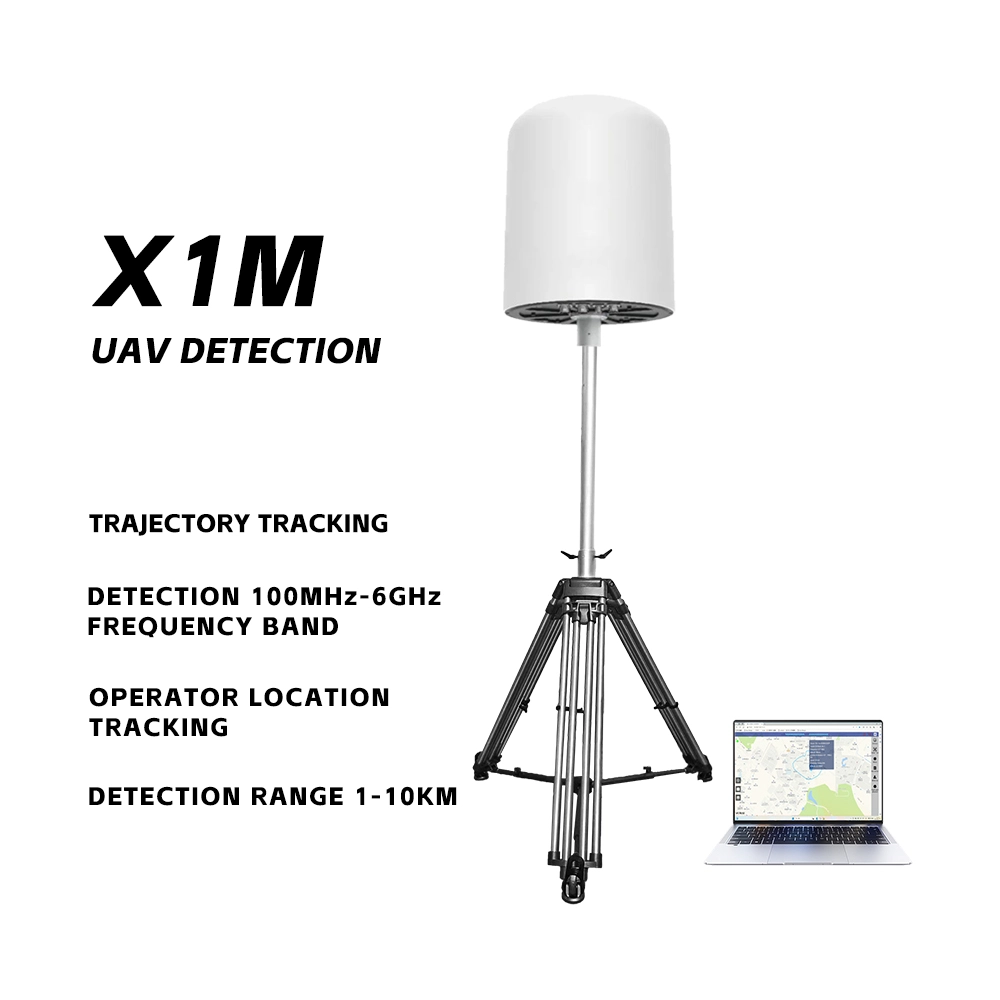
Vehicle-Mounted Drone Detection System


Site-Specific Drone Detection Systems

The same drone detector is not right for every site. An airport fence line, a prison yard, a coastal route and a festival stage all defend a different piece of sky, so the equipment has to be matched to range, terrain and the systems already in place. Security teams comparing drone detectors are really comparing detection profiles — what must be seen, from where, and how fast a decision has to follow.

1–10 kmDetection & positioning distance, environment dependent
≥5 targetsSimultaneous tracks with model identification
7×24 hoursContinuous day-and-night operation
Vehicle-Mounted Drone Detection System Multi-Frequency 10km Durable Easy-to-Deploy Tripod Mode Security Protection,Your low-altitude defense expert,Long-Range Greetwin Drone Detector 5km D2 UAV Detection System IP65 Water Resistant 100MHz-6000MHz Frequency Public Places
Detection profiles

Six site profiles, one decision framework

Read the five lines in each card and you have the working brief for that site: the threat, the range, the environment, the relationship to existing kit, and the configuration that usually results.

01

Airport & airfield

Defending againstIncursions near approach paths and perimeter fences, plus unauthorised filming of aircraft and apron activity.
Distance actually neededLong range. The fence line is often kilometres from the runway, and open airspace supports the upper end of the 1–10 km detection range.
Environment & EMCWide, open and frequently remote. Radio traffic is dense, so a receive-only sensor that adds no transmit energy to the spectrum is the safer neighbour.
Alongside existing radar / RFWorks as an independent layer over primary radar and existing RF sensors, and keeps reporting when the rest is saturated.
Typical configurationFixed outdoor siting for permanent perimeter coverage, plus a vehicle-mounted unit for patrol roads.
02

Prison & correctional

Defending againstShort-range contraband drops — phones, drugs and small packages — flown over walls and across exercise yards.
Distance actually neededShort to mid range. The wall-to-yard distance matters far more than a headline figure, because the drone appears close and briefly.
Environment & EMCDense masonry and metal produce reflections, and the equipment is expected to sit outdoors continuously. A fixed structural design built for long-term outdoor use is the practical fit.
Alongside existing radar / RFLayers with fixed detection stations, cameras and metal-detection screening rather than replacing them.
Typical configurationA fixed outdoor unit for the core area, with a mobile unit brought in for yard sweeps and special operations.
03

Border, coastal & long perimeter

Defending againstSmuggling drones crossing a long, sparsely monitored line, often at night and away from the nearest patrol.
Distance actually neededAs much as the site can give. Maximum range with 360° coverage lets a small team watch kilometres instead of a single viewpoint.
Environment & EMCHarsh weather, remote siting and limited power or connectivity. Continuous operation in severe conditions is the baseline, not a bonus.
Alongside existing radar / RFPairs with existing radar and patrols; the shared track list lets an incoming shift pick up contacts without losing the picture.
Typical configurationSeveral fixed outdoor units along the line, with a vehicle-mounted unit for response and gap coverage.
04

Stadium, festival & large event

Defending againstNuisance and malicious flights over crowded areas, where an airspace incident becomes a safety and evacuation problem.
Distance actually neededMid range with fast refresh. The ≤5 s identification response time matters more than raw distance when spectators are below.
Environment & EMCTemporary and congested: no civil works, no permanent masts, and dense spectator Wi-Fi and broadcast spectrum in use.
Alongside existing radar / RFComplements temporary radar and the event control room. Because the unit emits nothing, it will not disturb broadcast or venue equipment.
Typical configurationTripod-mounted temporary posts for the event window, then packed away with the rest of the site infrastructure.
05

Critical infrastructure

Defending againstReconnaissance flights and payload drops over substations, refineries and water treatment plants.
Distance actually neededDriven by asset footprint — a compact compound and a sprawling refinery sit at very different points in the 1–10 km range.
Environment & EMCHigh-voltage or process-plant electromagnetic conditions, with monitoring expected around the clock.
Alongside existing radar / RFAdds an independent passive layer to existing radar and RF installations, and can be the only reporting source when those are saturated.
Typical configurationFixed outdoor siting with the track list feeding the control room, plus range extension where the perimeter is long.
06

Mobile patrol

Defending againstFast, unpredictable incursions that appear between fixed sites, or probe a perimeter from a direction nobody is watching.
Distance actually neededWhatever the moment demands — the detection footprint travels with the vehicle instead of staying put.
Environment & EMCIn motion, on rough ground and through changing terrain, so ease of deployment and a stable mount matter as much as sensitivity.
Alongside existing radar / RFActs as the mobile piece in an existing detection layout, closing the gaps between fixed installations.
Typical configurationVehicle-mounted operation for patrols, with a tripod mode for temporary static posts at checkpoints and lay-bys.
Applies to every site

What stays constant regardless of venue

Site type changes the range, the terrain and the integration, but four requirements hold everywhere. These are the minimums the SIG-X1M is built to meet before any site-specific configuration is chosen.

  • Passive detectionThe device emits no electromagnetic signals while it works. It only listens and transmits nothing, so it adds no electromagnetic environmental pollution and carries no transmit-side licence burden.
  • Multi-band coverage900 MHz, 1.2 GHz, 1.4 GHz, 2.4 GHz, 5.2 GHz and 5.8 GHz cover the control and video links used by the platforms most sites actually see.
  • Five or more simultaneous tracksAt least five targets can be detected and at least five trajectories displayed together, each contact carrying aircraft type, for supported models, the model name.
  • 7×24 operationContinuous day-and-night watch, stated as suitable for complex electromagnetic environments and harsh weather, with 360° detection of intrusion into the core area.
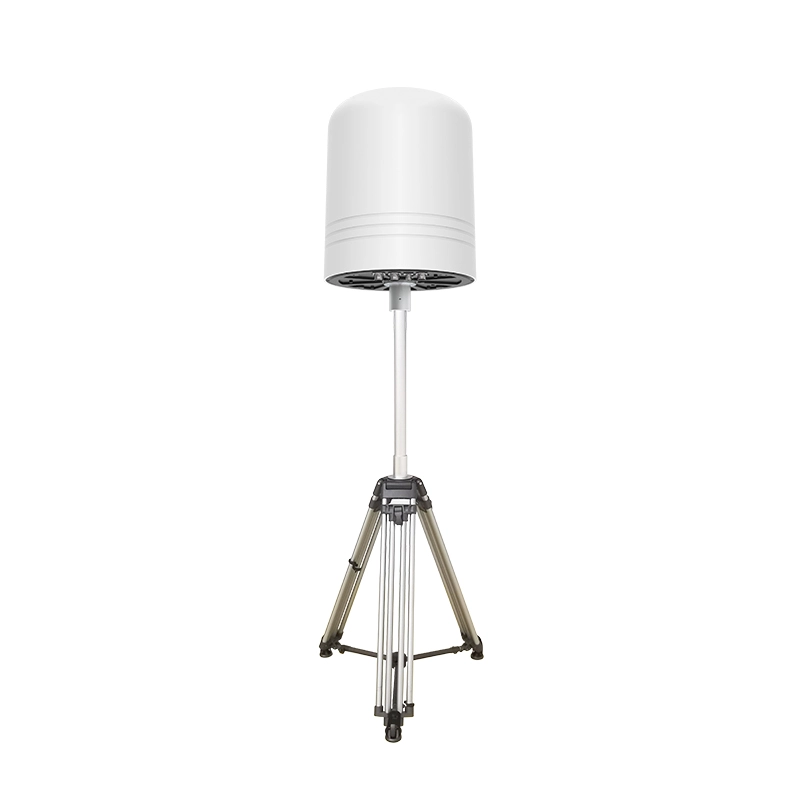
Multi-band passive drone detector unit shown with its detection coverage for continuous site monitoring
Separation is the point, not just the alarm. Operators can distinguish a passing toy from a serious platform before deciding a response, and the track list can be shared or read out so the watch does not depend on one person watching a screen through a shift.
Deployment modes

The same site needs different modes at different times

Site type decides what has to be detected. Deployment mode decides where the equipment stands on the day. The SIG-X1M supports vehicle-mounted, tripod-mounted and fixed outdoor siting, so one site can move between all three as its risk profile changes.

Deployable drone detection system arranged for vehicle, tripod and fixed outdoor use
Mode Best for Setup character Coverage character
Vehicle-mounted Patrolling a long perimeter; moving toward a live contact Moves with the patrol vehicle, no site preparation Coverage travels the route and follows the response
Tripod-mounted Temporary posts; events, short operations, checkpoint duty No civil works, deploys quickly and packs away Static 360° watch for as long as it is deployed
Fixed outdoor siting Permanent coverage of a core area or asset Fixed structural design installed for long-term outdoor use Continuous 360° of the core area, 7×24

Tell us the site, we’ll confirm the configuration

Send the site type, the perimeter length and the drone models you are most concerned about. If one specific model is your main worry, send it to us and we will confirm how it is handled.

Model matchingName the platform you see most often and we will confirm whether it is detected, and whether it is individually identified by model.
Site surveyShare the perimeter, terrain, existing radar or RF equipment and power availability, and we will recommend fixed, vehicle or tripod deployment.
Quotation & customisationRequest pricing, bulk-order terms and custom configuration for a multi-site rollout or an integration project.

Related Reading

Three notes to help clarify product requirements before contacting the supplier.

Passive RF Drone Detection for Critical Infrastructure Sites

Passive RF drone detection is a receive-only monitoring method that picks up the radio links a drone is already using, giving sensitive sites an early air picture without transmitting anything at all.

Read article

Passive Drone Detection Systems for Airport Perimeter Security

Passive detection gives airport perimeter security teams a way to add drone awareness without adding new radio emissions, and the decision depends on spectrum compatibility, deployment geometry, and…

Read article

How Do Security Integrators Choose a Drone Detector Manufacturer?

Security integrators choosing a drone detector manufacturer need to qualify source manufacturing, OEM/ODM customization, and RFQ support before comparing unit specifications.

Read article

Frequently Asked Questions

how far can the sig-x1m detect a drone?

detection and positioning distance is 1–10 km depending on the environment, with a detection height of 0–1000 m. in an open environment the product page notes that some models can be detected at distances of over 10 km.

does a passive drone detector need a radio licence?

the sig-x1m emits no electromagnetic signals while it works — it only listens and transmits nothing. because it adds no electromagnetic environmental pollution to the site, there is no transmit-side licence burden to plan around.

how many drones can be tracked at the same time?

at least five. the specification lists ≥5 simultaneous targets and ≥5 trajectories displayed together, with an identification response time of ≤5 s, a detection success rate of ≥95% and a positioning accuracy of ≤10 m.

which drone models can the detector identify?

it detects and identifies common brands including dji series drones, autel, dahua, haoxiang, xiaomi, yuneec, hubsan, powervision and tello. dji mavic, air, mini, fpv and avata can be individually located. the covered bands also take in the control and video links used by fpv platforms and short-range wi-fi aircraft, so self-built airframes and toys still appear as contacts even when the model itself is unknown.

can it work alongside existing radar or rf sensors?

yes. where a site already runs radar, rf sensors or countermeasure equipment, the unit adds an independent set of ears and keeps reporting when the rest is saturated. operators can also share or read out the track list, so the watch does not depend on one person watching the screen through a shift.

how is it deployed — vehicle, tripod or fixed?

all three. it can be vehicle-mounted to move with a patrol, tripod-mounted as a temporary post with no civil works that packs away afterwards, or installed as a fixed outdoor structure supporting long-term outdoor use, with continuous 7×24 operation across all modes.