


|
Identification types |
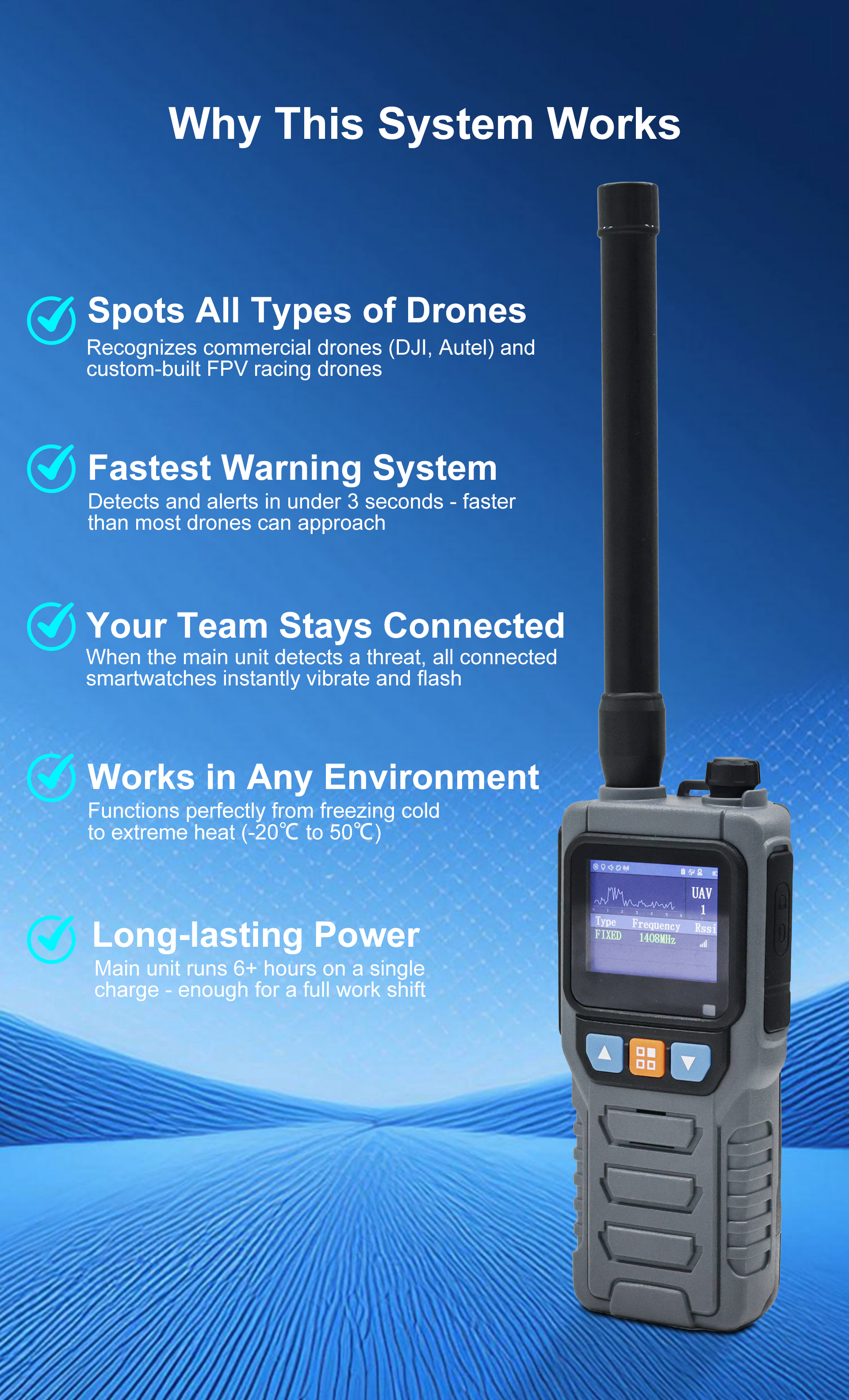
Mainstream drones such as DJI, Autel, Hubsan, as well as FPV racing drones and DIY drones. |
|
Frequency range |
Supports customizable scanning from 70MHz to 6.2GHz (default detection bands: 400MHz, 800MHz, 900MHz, 1.2GHz, 1.4GHz, 2.4GHz, |
|
Detection radius |
≥1.5km (line of sight, clean electromagnetic environment). |
|
Wristband information reception terminal communication distance |
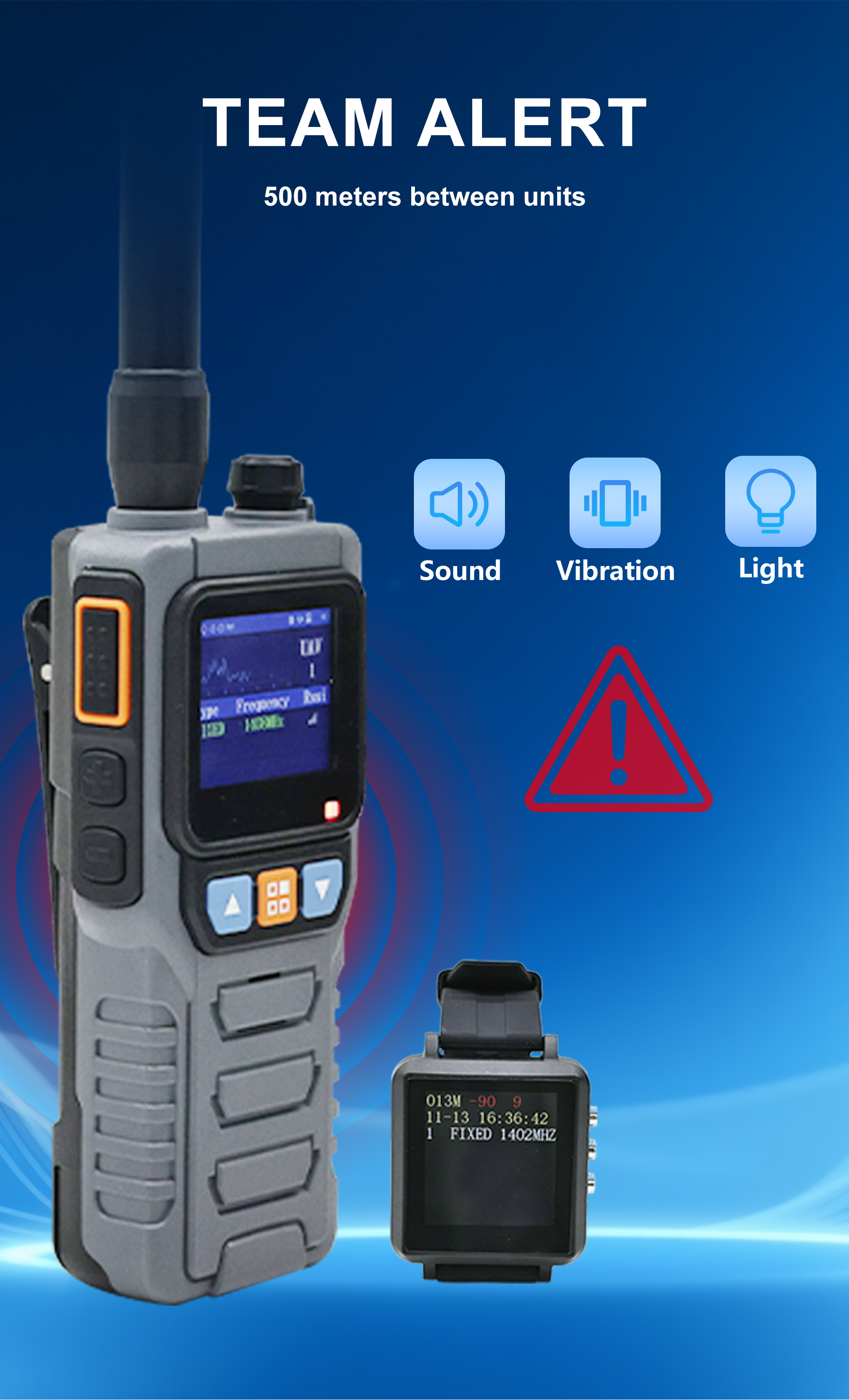
≥500m (open, unobstructed area). |
|
Detection response time |
≤3s (8 frequency bands); ≤5s (12 frequency bands). |
|
Detection principle |
Spectrum scanning and spectrum feature recognition. |
|
Alarm methods |
Sound, vibration, light. |
|
Screen size |
2.0 inches. |
|
Battery life |
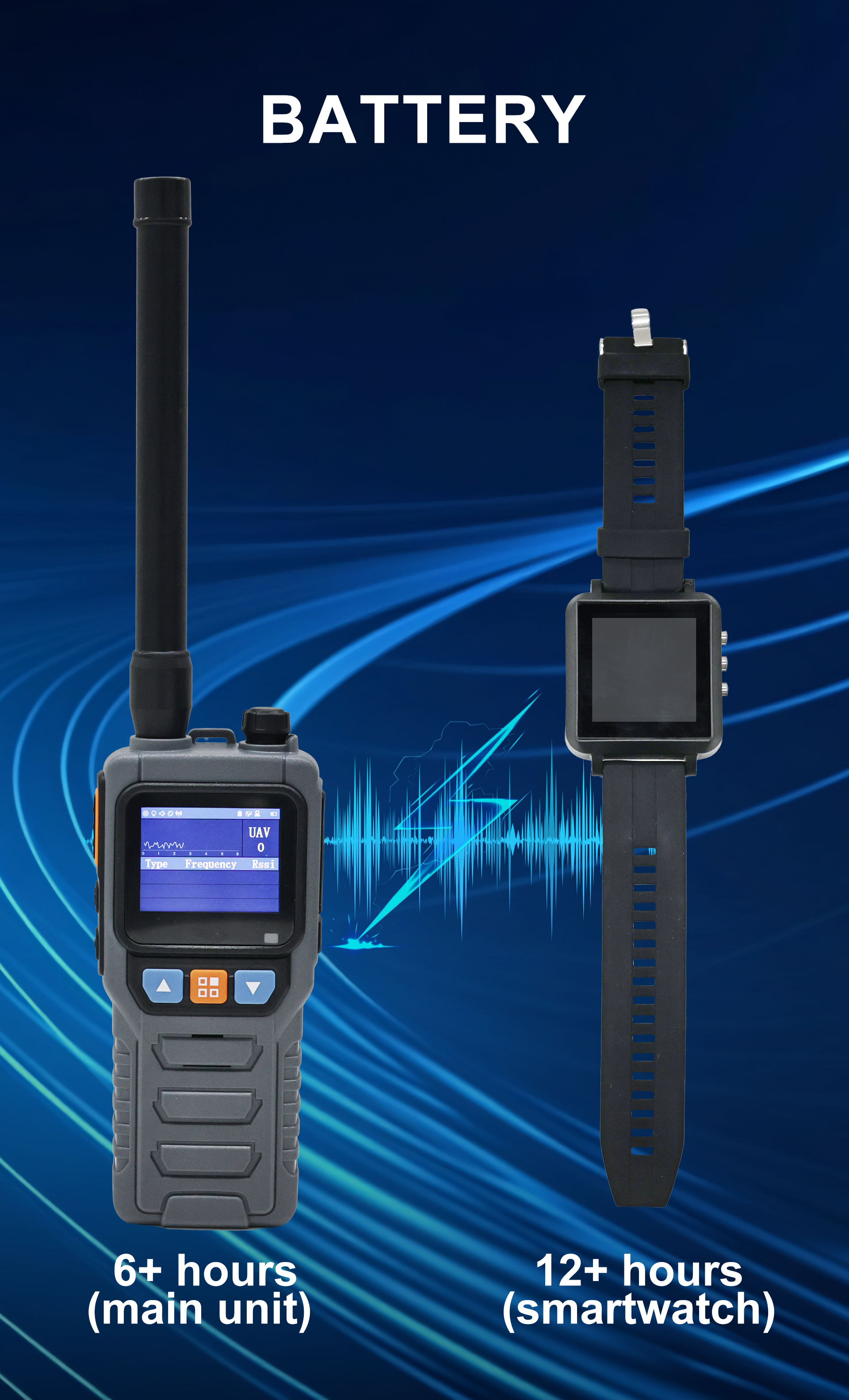
≥6 hours (main unit); ≥12 hours (wristband). |
|
Device dimensions |
142mm × 63mm × 38mm (L × W × H). |
|
Operating temperature |
-20℃ to +50℃. |
|
Power supply |
Removable lithium battery. |
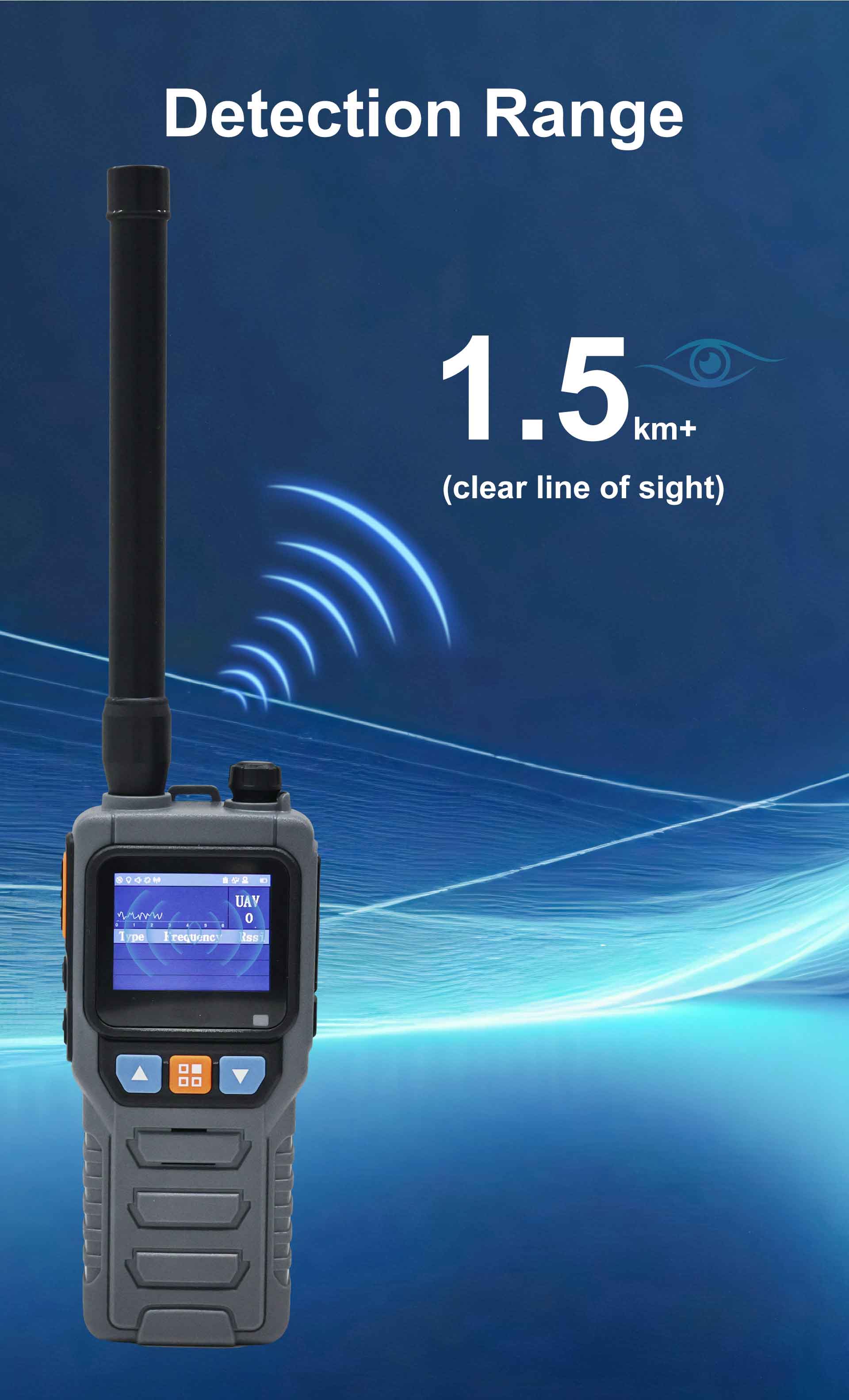



Detection distance is quoted for line of sight in a clean electromagnetic environment, and that is the figure to plan around on open ground: a perimeter road, a coastal path, an airfield boundary. In built-up areas the picture changes. Buildings, containers, loading banks and dense radio traffic all shorten the distance at which a drone link first appears, so patrol spacing and vantage points matter more than the headline number. Height helps too — an airframe flying low behind a ridge wall or a terminal building may stay out of range until it climbs. Hold the handset clear of vehicle bodies and steelwork, since metal close to the antenna quietens what the receiver hears, and work a route in two passes from different positions to pick up what a single sweep misses. Anti drone companies staging units across a client estate usually walk the site first and mark two or three standing checkpoints before deployment.
Default coverage — the unit arrives scanning the mainstream drone control and video links that most consumer and commercial airframes use, which covers the majority of sites out of the box. Nothing needs configuring before a first deployment. Custom scanning — the scanning range can be customized, so if your region's drone activity sits on links outside the default set, the band list can be built around your threat picture. Counter UAS teams normally send the site type and the drone activity they have already seen, and the scan set is matched to it. Eight bands or twelve — the unit can run an 8-band or a 12-band set. Twelve bands widen coverage but lengthen each scan cycle, while eight bands give the quicker confirmation when a contact is already airborne and moving. The wider set suits general patrol sweeps; the narrower set suits active tracking.
Choosing between a handheld detector, a vehicle-mounted or tripod-deployed system, a fixed passive detection installation, and a GaN suppression module comes down to your site, your threats and your existing equipment. Our team works with integrators and security buyers from your first enquiry: we help match the right detection range, band coverage and output level to the job, support customisation of module parameters, and stay available through installation, commissioning and troubleshooting. Send us your deployment scenario and we will recommend a configuration.
Three alarms work together: sound, vibration and a light indicator. That combination lets an officer in a noisy yard feel the alert rather than hear it, and the on-board screen shows which band triggered the warning. Because the alert is immediate, the operator can turn towards the contact instead of watching a display.
No. It works by receiving and analysing radio signals: spectrum scanning first, then feature matching to confirm what the signal is. Because it listens rather than transmits, it adds nothing to the RF environment around it, so operators can run a check in a busy area without affecting other equipment on site.
The wristband is the companion link for a second team member. It receives the same alerts as the handset, so the officer carrying the detector can keep moving and scanning while a supervisor, a driver or a patrol partner stays informed without watching a screen. Teams working a site in pairs usually issue the two units together.
Treat it like any other patrol kit. Charge the removable lithium battery before a shift, keep the handset in its case when it is not in use, and avoid leaving it in a closed vehicle where summer sun or hard frost pushes it outside its working temperature range. Wipe the housing with a dry or slightly damp cloth rather than solvents, and check the alarms before you go out.
Yes. Most sites run detection in layers, and this unit adds a mobile confirmation step to the anti drone solutions you already have in place rather than replacing them. When a fixed installation raises an alert, an officer can walk out, confirm the contact and localise it on foot without waiting for a vehicle or a control-room decision.
Two things matter most: the bands your area's drone activity uses, and how many officers will carry a unit. If you work with anti drone companies or a system builder, send the site and threat picture with your enquiry so the scan configuration matches the deployment. Also confirm how many wristband terminals and spare batteries your team needs.


