In January 2026, SIGNOWA, a professional provider of anti-drone solutions, officially launched the new generation "X1D" multi-mode integrated anti-drone system. This system integrates three modules: passive radio frequency detection, low-altitude blind spot radar, and intelligent interference. It is specifically designed for complex electromagnetic environments such as urban canyons, airport peripheries, and large-scale event sites, enabling the complete passive detection, prec
Established for 11 years, evolving from an antenna expert to a leader in system integration
Since its establishment in 2015, SIGNOWA has evolved from an initial supplier of anti-drone antennas and RF modules to a system-level solution provider with full-stack software and hardware R&D capabilities. The company's dual factories and three-story manufacturing system in Shenzhen and Qingyuan have provided a solid guarantee for the rapid mass production of the "X1D" system.
"X1D" has made significant upgrades to its three core technologies.
Passive detection, silent duty
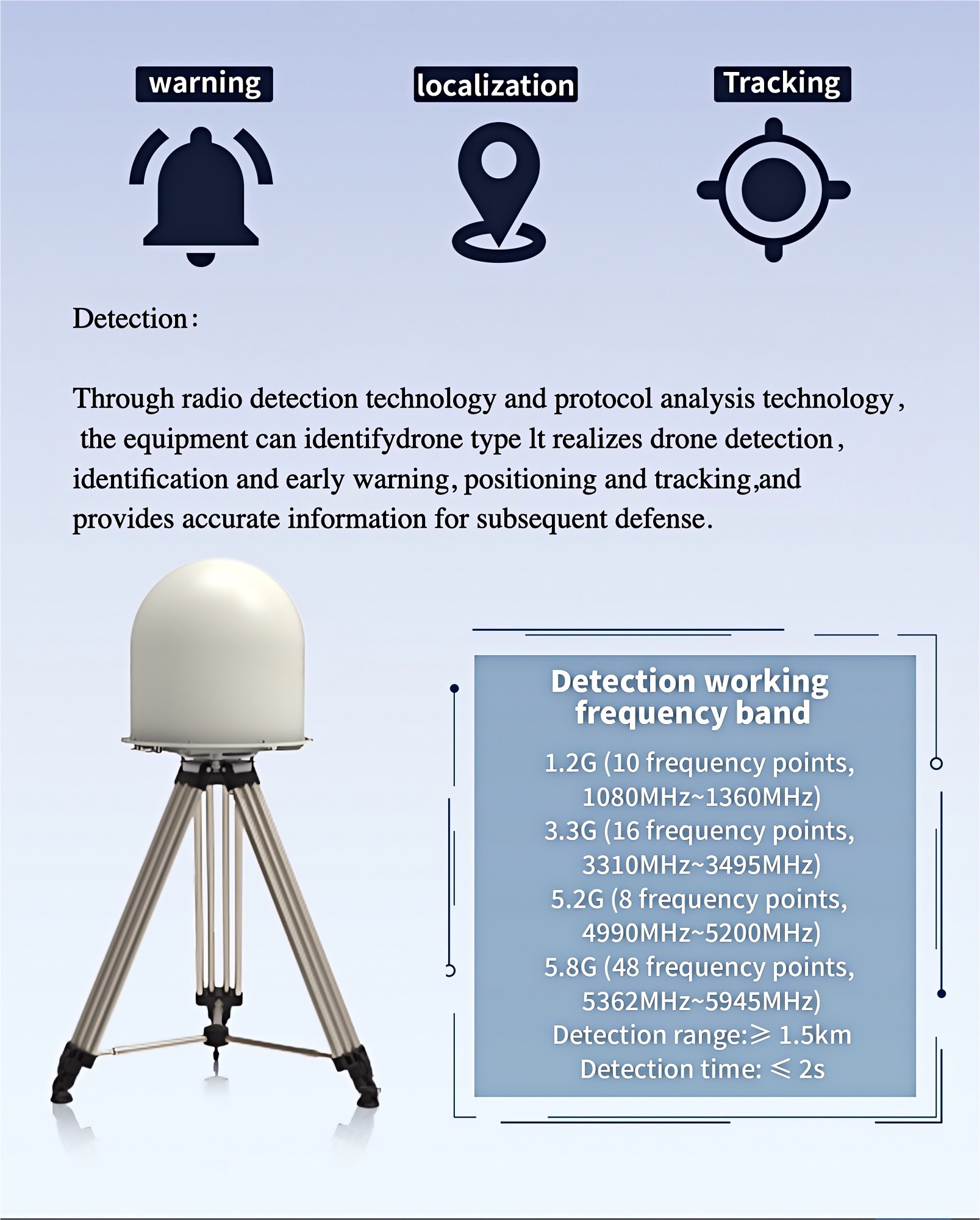
Unlike traditional radars, this system employs passive radio frequency fingerprint identification technology and does not emit any radio waves.
It can silently monitor the spectrum characteristics of drones within a 3-kilometer radius around 24 hours a day.
It supports library-level identification of over 100 mainstream models such as DJI, Daotong, Parrot, and self-organizing network drones.
Lightning fusion, zero false alarms
To address the issue of urban high-rise buildings blocking visibility, the system integrates low-altitude continuous-wave radar with photoelectric linkage tracking.
If a radio frequency detection detects a suspicious signal, the radar automatically guides the photoelectric turntable to quickly lock onto the target.
Even in the dark or on hazy days, it can clearly obtain the visual image of the unmanned aircraft.
Precise interference, with low collateral damage
The backend jammer employs the "narrow beam + intelligent power control" technology, and only emits interference signals in a targeted manner towards the invading drones.
It supports three handling modes: disengagement (cutting off the video transmission), forced landing (cutting off the video transmission + remote control), and one-click return to base (only blocking GPS). Different scenarios can be flexibly selected.
Typical deployment case
A clearance protection project for an international airport
SIGNOWA has deployed the "X1D" system for a major airport in East China with a capacity of over 10 million passengers. Six sets of detection nodes and three sets of interference units were deployed at both ends of the runway, forming a low-altitude electronic fence with a total length of 8 kilometers. Since the system has been in operation for six months, it has successfully detected and successfully deterred over 150 instances of "unauthorized flights" that intruded into the airspace, achieving zero safety incidents.

SIGNOWA CTO's comment:
"After 11 years of technological accumulation, what we are most proud of is not the strength of a single device, but the engineering capabilities at the system level. The launch of 'X1D' marks another advancement in our practical combat capabilities in complex electromagnetic environments. We not only provide products, but also offer full-cycle services from site survey, deployment to operation and maintenance."
【Conclusion】
At present, the "X1D" system has received orders from both domestic and international channels. SIGNOWA, leveraging its three-tier manufacturing plant in Shenzhen and Qingyuan, can deliver the products within 15 working days after signing the contract. Global security integrators, government agencies, and large enterprises are welcome to inquire about customization.

